
The Advantages of Automated Planers in Reducing Labor Costs
In the daily production of metal processing workshops, manual operation of planers was once extremely common: workers needed to continuously monitor the processing, frequently manually load materials and adjust parameters, with less than 70% of the effective working time in an 8-hour shift. As labor costs have risen year by year, labor costs in the machining industry have reached 35%, and this traditional model is severely squeezing corporate profit margins. The emergence of automated planers, with the core logic of “machines replacing manual labor,” has become a key solution for reducing labor costs.
Data comparisons best illustrate the differences. The practice of an automotive parts processing plant shows that a production line equipped with 10 traditional planers requires 8-10 workers to operate and coordinate them. Based on the industry average monthly salary of 6,000 yuan, the annual labor cost reaches 576,000-720,000 yuan. After introducing an automated planer production line of the same scale, only 1-2 monitoring personnel are needed, and the annual labor cost directly drops to 144,000-288,000 yuan, a reduction of over 60%. From the perspective of single-unit efficiency, a manual planer processes 30-50 parts per hour, while an automated planer, relying on automatic feeding and continuous operation, can process 80-150 parts per hour, thus reducing the unit labor cost.
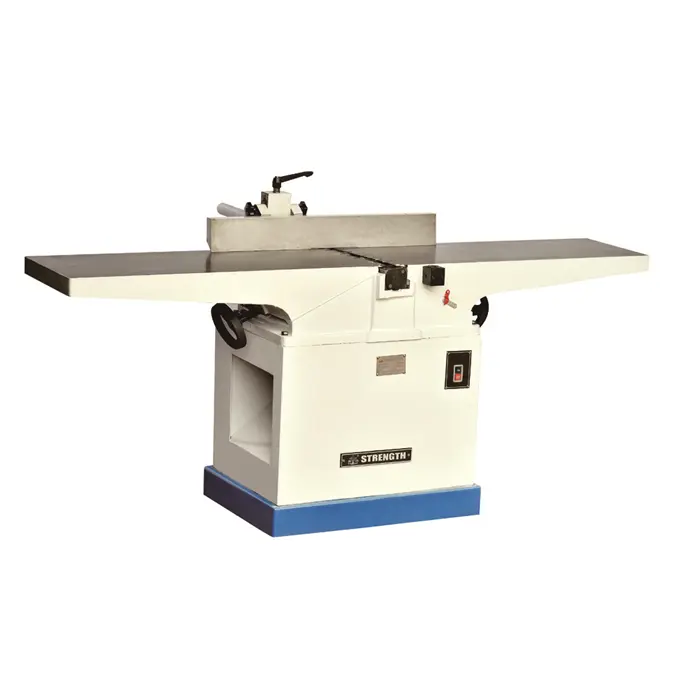
The cost reduction logic of automated planers stems from the systematic elimination of reliance on manual labor. In the traditional model, labor costs include not only direct operator wages but also hidden costs related to training, management, and staff turnover—new worker training cycles can take 1-3 months, and the production capacity loss due to staff turnover is often overlooked. Automated planers, through CNC systems that solidify processing parameters, combined with robotic arms for loading and online inspection, minimize manual intervention. In this model, workers only need to master equipment inspection and basic troubleshooting skills, reducing training costs by 80% and virtually eliminating the impact of staff turnover on production.
In the long term, the cost advantage of automated planers will continue to amplify through improvements in efficiency and precision. In terms of precision, manual operation is affected by fatigue and experience, often resulting in processing errors exceeding ±0.02mm and a scrap rate as high as 3%-5%. Automated planers, relying on computer program control, can control errors within ±0.005mm, reducing the scrap rate to below 0.5%. Data from a precision parts processing plant shows that after introducing automated planers, the reduction in scrap rate alone saved over 800,000 yuan annually in raw material waste costs.
The increased efficiency further reduces unit labor costs. Automated planers can operate continuously 24 hours a day, increasing effective working hours from 70% to over 90% of manual operation. Combined with the automatic flow between processes eliminating 20%-30% of manual handling waiting time, the daily output of a single production line can reach 3-4 times that of the traditional model. This efficiency advantage is particularly evident in mass production. The practice of an engineering machinery company has proven that the investment payback period for automated planer production lines can generally be controlled within 14-18 months, after which the annual savings in labor and related costs become a stable source of profit.
In today’s manufacturing sector, where cost pressures are increasingly prominent, the value of automated planers has long surpassed simply “machines replacing manual labor.” By transforming labor costs into controllable equipment investment, and combining the dual advantages of efficiency and precision, it constructs a more stable production cost structure. For manufacturing enterprises pursuing long-term development, introducing automated planers is not a one-time equipment upgrade, but a strategic choice to build an efficient production system and enhance market competitiveness.
Post time: Dec-05-2025