
Basic Selection Factors for Woodworking Planers
I. Clarify Processing Needs: The Core Prerequisite for Selection
1. Processing Materials and Hardness
* Softwood (Pine, Fir): Lower planer power requirements; a standard household planer (750-1500W) is sufficient.
* Hardwood (Oak, Walnut, Mahogany): Requires a high-power (2000W or higher) and high-torque motor, paired with wear-resistant cutting tools to avoid planing jams or tool damage.
* Special Materials (Composite Boards, MDF): Pay attention to the planer’s dustproof design to prevent sawdust from clogging the motor; select cutting tools with moderate sharpness to prevent chipping.
2. Processing Accuracy Requirements
* Ordinary Furniture Making: Surface roughness Ra≤3.2μm, planing thickness error ±0.1mm is sufficient; a mid-range benchtop planer is adequate.
* Precision Woodworking/Musical Instrument Making: Requires Ra≤1.6μm, thickness error… For ±0.05mm accuracy, prioritize high-end models with spiral cutter shafts and variable frequency speed control. For mass production: Focus on repeatability and positioning accuracy; models with digital display scales and automatic feeding devices are recommended to improve efficiency and consistency.
3. Processing Size Range
Sheet Width: The maximum planing width for household-grade planers is typically 200-300mm, while industrial-grade planers can reach over 500mm. Choose based on the width of the sheet material you frequently process to avoid “small machine doing heavy work” and causing sheet deformation.
Sheet Thickness: Minimum planing thickness ≤3mm (for thin material processing), maximum planing thickness ≥50mm (for thick material planing). Allow 10-20% margin.
Length Adaptability: Benchtop planers require a worktable extension plate (for long materials), while handheld planers are suitable for short materials or on-site processing.
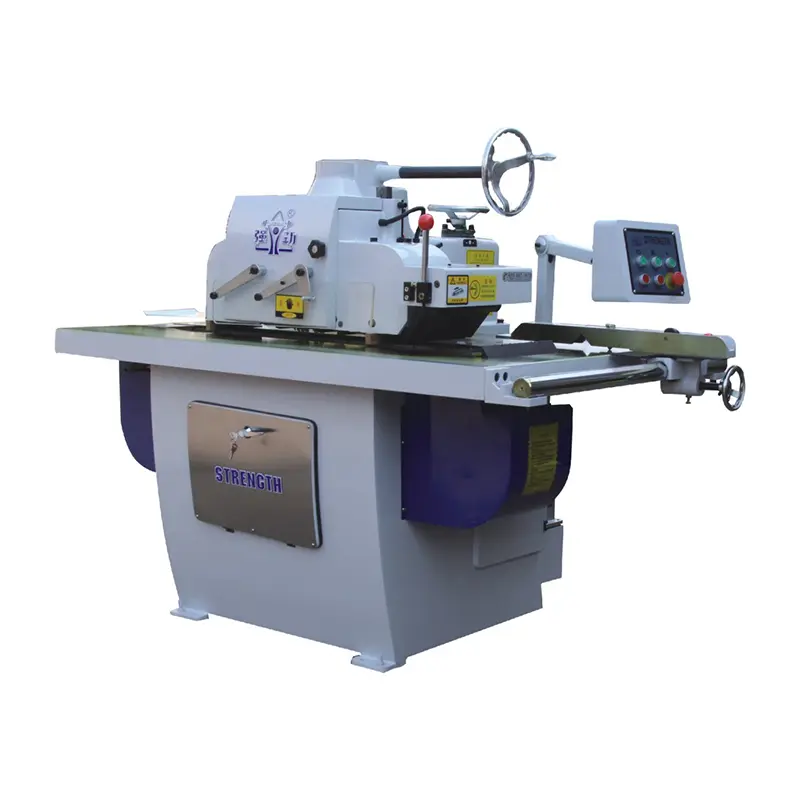
II. Core Equipment Performance: Determines User Experience and Lifespan
1. Motor and Power System
Power Matching: Select according to the material being processed (mentioned above), and also pay attention to the motor type. Induction motors offer high stability and long lifespan, making them suitable for industrial applications; series motors are small in size and high in speed, suitable for home/portable applications.
Speed adjustment: Variable frequency speed control (5000-12000rpm) adapts to different materials; low speed with high torque is used for hardwoods, while high speed and high efficiency are used for softwoods.
Heat dissipation design: For continuous operation, models with cooling fans and metal casings should be selected to prevent motor overheating and shutdown.
2. Tool Shaft and Tool Configuration
Tool Shaft Type: Straight tool shaft (low cost, easy to replace, suitable for general machining); spiral tool shaft (smooth cutting, low noise, fine wood chips, suitable for precision machining, higher price)
Number of Tools: Straight tool shafts typically have 2-4 blades, spiral tool shafts have 6-12 blades; more blades result in more uniform cutting.
Tool Material: High-speed steel tools (high cost-performance ratio, suitable for softwoods/common hardwoods); tungsten carbide coated tools (high hardness, wear-resistant, suitable for hardwoods/batch processing); tool versatility (ease of procurement and replacement) needs to be confirmed.
3. Machine Body and Worktable Design
* Machine Body Material: Cast iron body offers high stability and excellent shock absorption, preventing machine body swaying during processing and ensuring accuracy; steel plate body is lightweight and suitable for mobile applications.
* Worktable: Surface must be hardened (hardness HRC50 or higher), flatness error ≤0.02mm/m, with anti-slip texture to prevent sheet metal slippage, adjustable worktable tilt angle (0-45°) to better suit angle planing needs.
III. Safety Standards: Essential Requirements
1. Protective Devices
* Must be equipped with anti-rebound devices (to prevent sheet metal from rebounding and causing injury), tool guards (fully covering the tool shaft, leaving only the processing opening), and an emergency stop button (response time ≤0.5s).
* Meets international safety standards: CE (EU), ANSI (USA), ISO (International) certifications; avoid purchasing “three-no” products (products without safety certifications).
2. Operational Safety
Two-Handed Operation Design: Large bench planers require both hands to simultaneously activate the switch, preventing accidental contact with the cutting tool during single-handed operation.
Dust Prevention and Noise Reduction: Dust collection interface (compatible with vacuum cleaners) reduces sawdust pollution; noise level ≤85dB (industrial grade) / ≤75dB (domestic grade), protecting operator health.
Anti-Slip and Stability: Rubber feet or mounting holes on the bottom of the machine prevent slippage during processing.
IV. Usage Scenarios: Balancing Practicality and Convenience
1. Space Requirements
Workshop/Factory: Choose a large bench planer (fixed placement), requiring reserved operating space (≥1.5m around the machine), ventilation, and dust handling space.
Home Workshop/Small Studio: Prioritize compact bench planers (≤1000×500×800mm) or portable planers to save space.
On-Site Construction: Portable planers (≤5kg) and wireless charging planers are more convenient; battery life (≥4 hours of continuous operation) is important.
2. Ease of Maintenance
Tool Replacement: Quick-release cutter shaft design, no special tools required, saving maintenance time
Cleaning Difficulty: No dead corners in the machine body, easy to clean wood chips; motor heat dissipation vent with dust filter (removable and washable)
Accessory Universality: Wear parts such as cutters and bearings can be easily purchased on the market, without relying on original factory-specified parts
V. Cost-Effectiveness: Don’t blindly pursue high-end, only choose the “suitable model”
1. Initial Investment
Household/Hobby Grade: 1000-5000 RMB, meets basic planing needs, suitable for occasional use
Professional/Small Workshop Grade: 5000-20000 RMB, improved precision and stability, supports 8 hours of work per day
Industrial/Mass Production Grade: 20000 RMB and above, high power, high automation, suitable for continuous operation
2. Long-Term Usage Costs
Tool Wear: Ordinary tool life is about 500 hours, high-end tools can reach 1500 hours Replacement costs are calculated based on annual processing volume per hour.
Energy consumption: Motor efficiency rating (IE2 and above are more energy-efficient). For industrial-grade models, variable frequency motors are recommended to reduce no-load energy consumption.
Maintenance costs: Choose models from reputable brands with excellent after-sales service to avoid difficulties with repairs or expensive spare parts later.
VI. Avoiding Pitfalls in Model Selection: These 4 common mistakes must be avoided:
**Blindly pursuing high power:** Excessive power increases energy consumption and noise, and makes operation more difficult. Match the power to your processing needs.
**Ignoring precision calibration:** Some low-priced models have poor table flatness and tool axis eccentricity. Request a precision testing report from the manufacturer beforehand.
**Focusing solely on price, ignoring brand:** Niche brands may pose safety hazards, and spare parts supply may be unstable. Prioritize well-known brands (such as Festool, DeWalt, Makita, etc.).
**Ignoring after-sales service and training:** For industrial-grade models, confirm whether the manufacturer provides installation, commissioning, and operation training services to avoid problems caused by improper operation.
Post time: Nov-21-2025